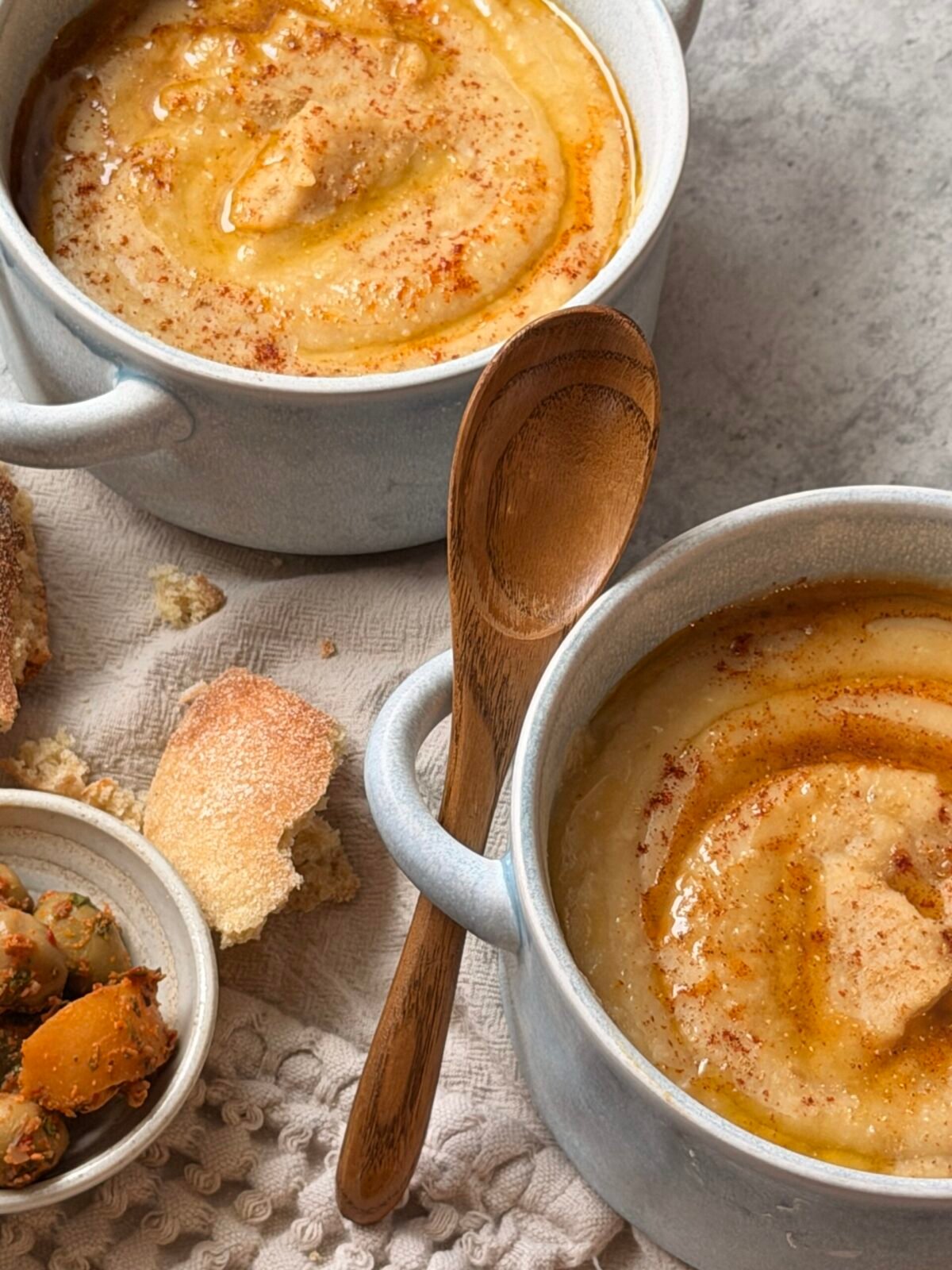
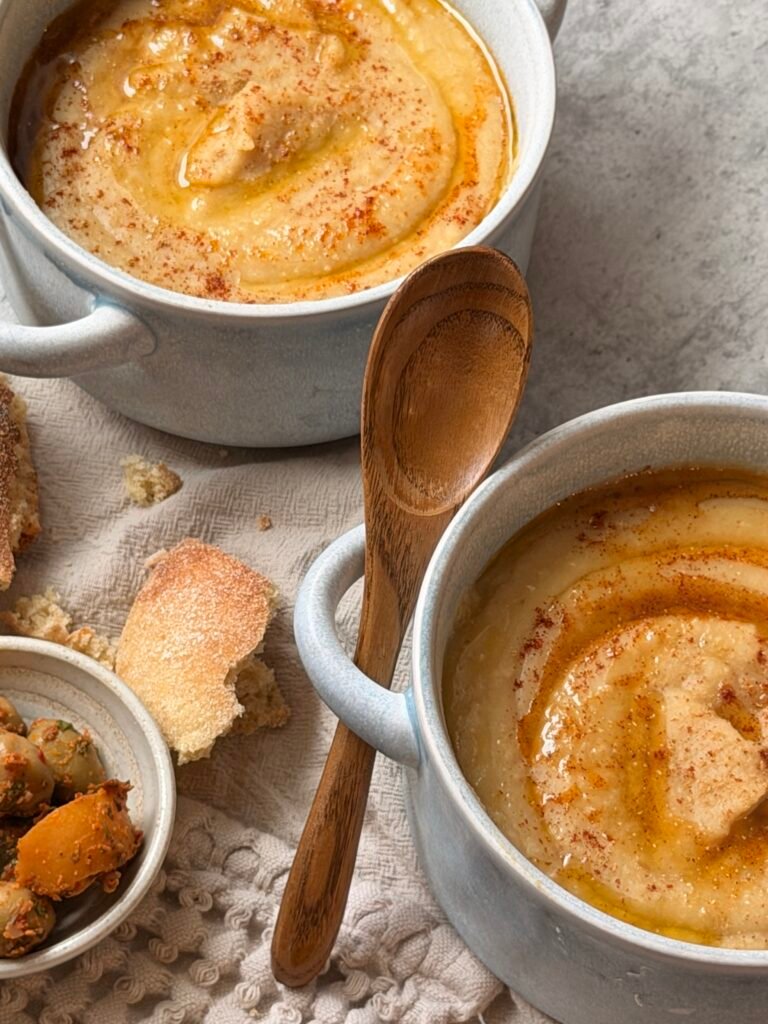
If you've ever visited Morocco during the winter, chances are you've come across this humble but incredibly satisfying soup. Bissara is a traditional Moroccan fava bean soup made with just a handful of simple ingredients, but don't let its simplicity fool you. It's rich, creamy, hearty, and full of flavor.
Growing up with Moroccan food, these are the kinds of dishes that remind me how much beauty there is in cooking with simple ingredients. Bissara doesn't require meat, complicated techniques, or an endless list of spices. Just dried fava beans, good olive oil, garlic, and a few pantry staples come together to make one of the most comforting meals.
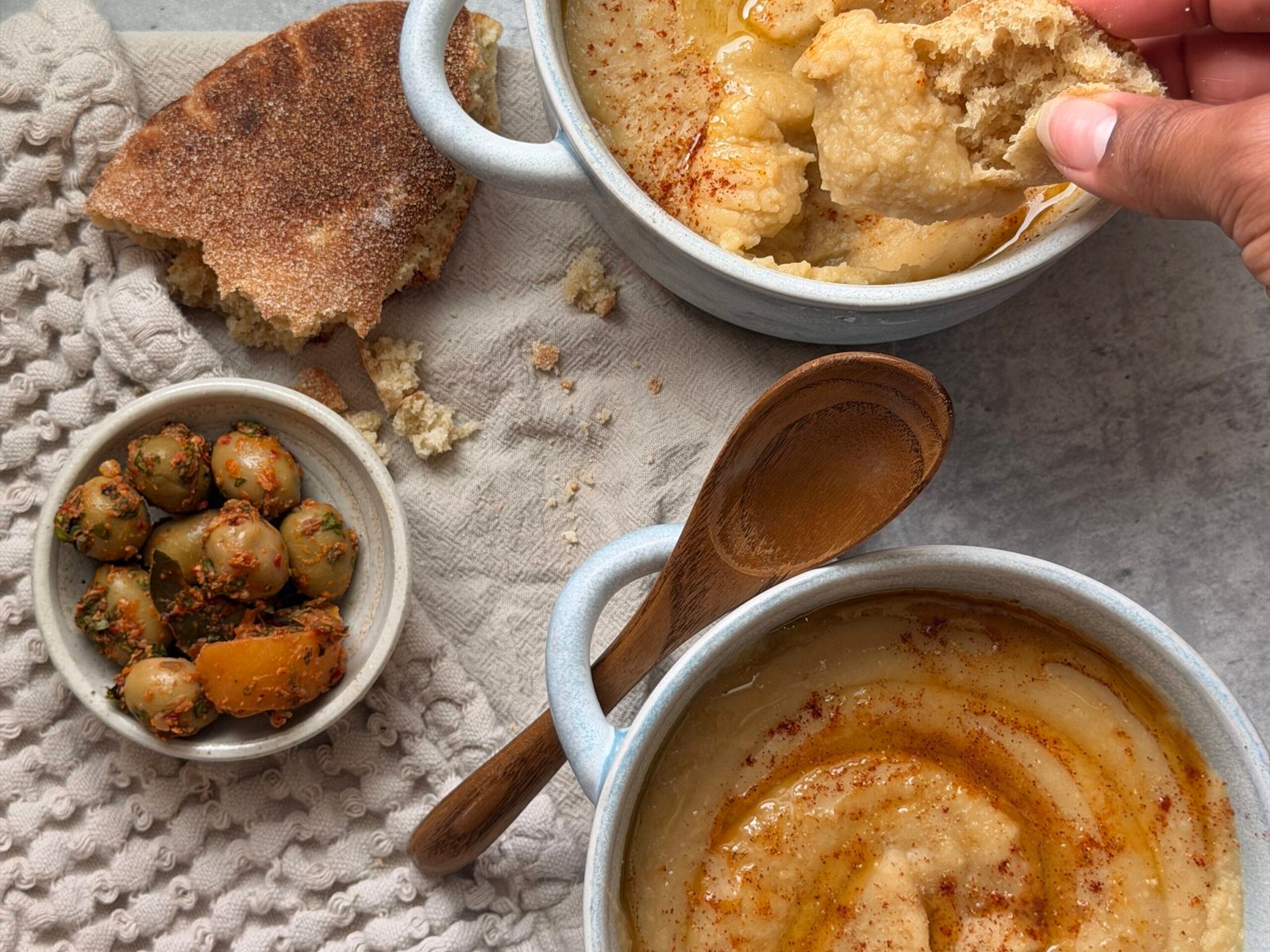
In Morocco, Bissara is especially popular during the colder months. You'll find it served piping hot at local restaurants and small neighborhood spots, with plenty of olive oil drizzled over the top, a sprinkle of cumin and paprika, and fresh bread on the side for dipping.
It's affordable, naturally filling, and the kind of meal that keeps you coming back for another bowl.
Ingredients
One of my favorite things about Bissara is how little you need to make it. Each ingredient has a purpose, and together they create so much flavor.
Dried Fava Beans: The star of the recipe! Dried fava beans soften as they cook and create that naturally creamy, thick consistency. You can use peeled or unpeeled dried fava beans, although peeled beans will generally cook faster and produce a smoother soup.
Olive Oil: A good-quality olive oil is essential. It adds richness and is traditionally drizzled generously over the soup before serving.
Garlic: Garlic gives the soup its signature savory flavor. I love frying the garlic in olive oil until fragrant and lightly golden before incorporating it into the soup.
Paprika: Adds warmth, color, and a subtle sweetness.
Ground Cumin: One of the most important seasonings in Bissara. Its earthy flavor pairs beautifully with the fava beans.
Red Pepper Flakes: A little sprinkle at the end adds just enough heat to balance the richness of the soup.
Salt: Brings all the flavors together.
See recipe card for quantities.
Instructions
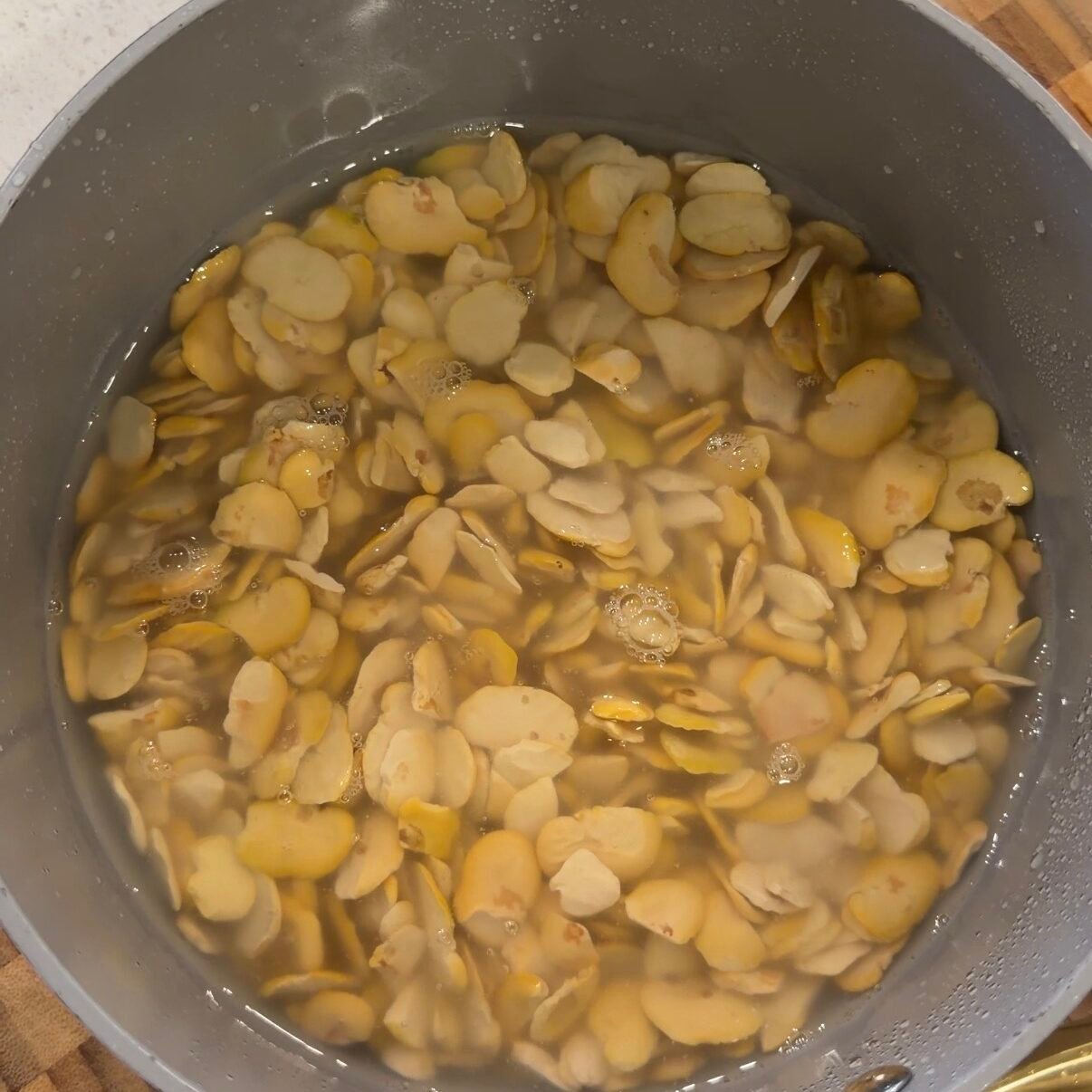
- Step 1: Wash and rinse dried fava beans and then bring to a boil on the stove.
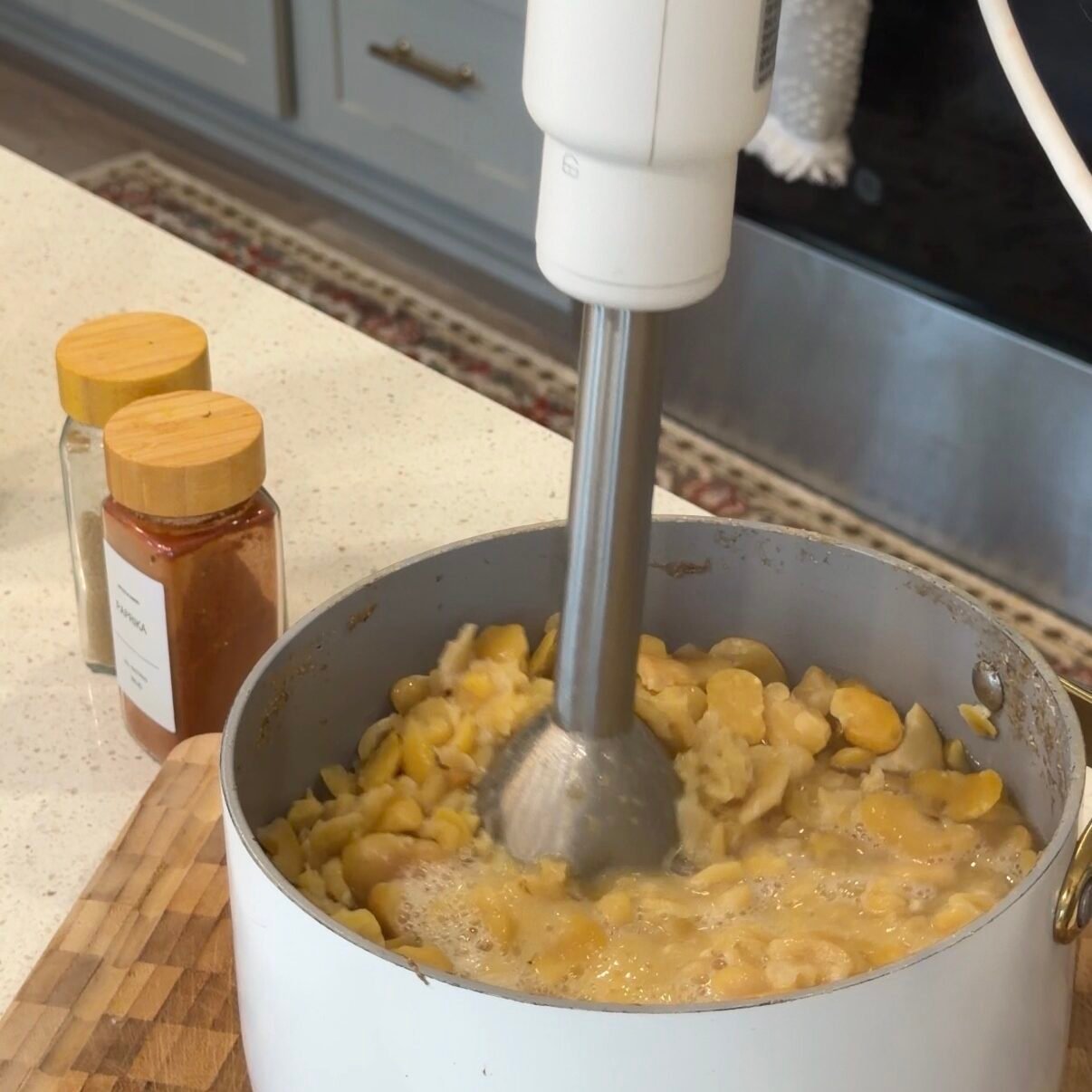
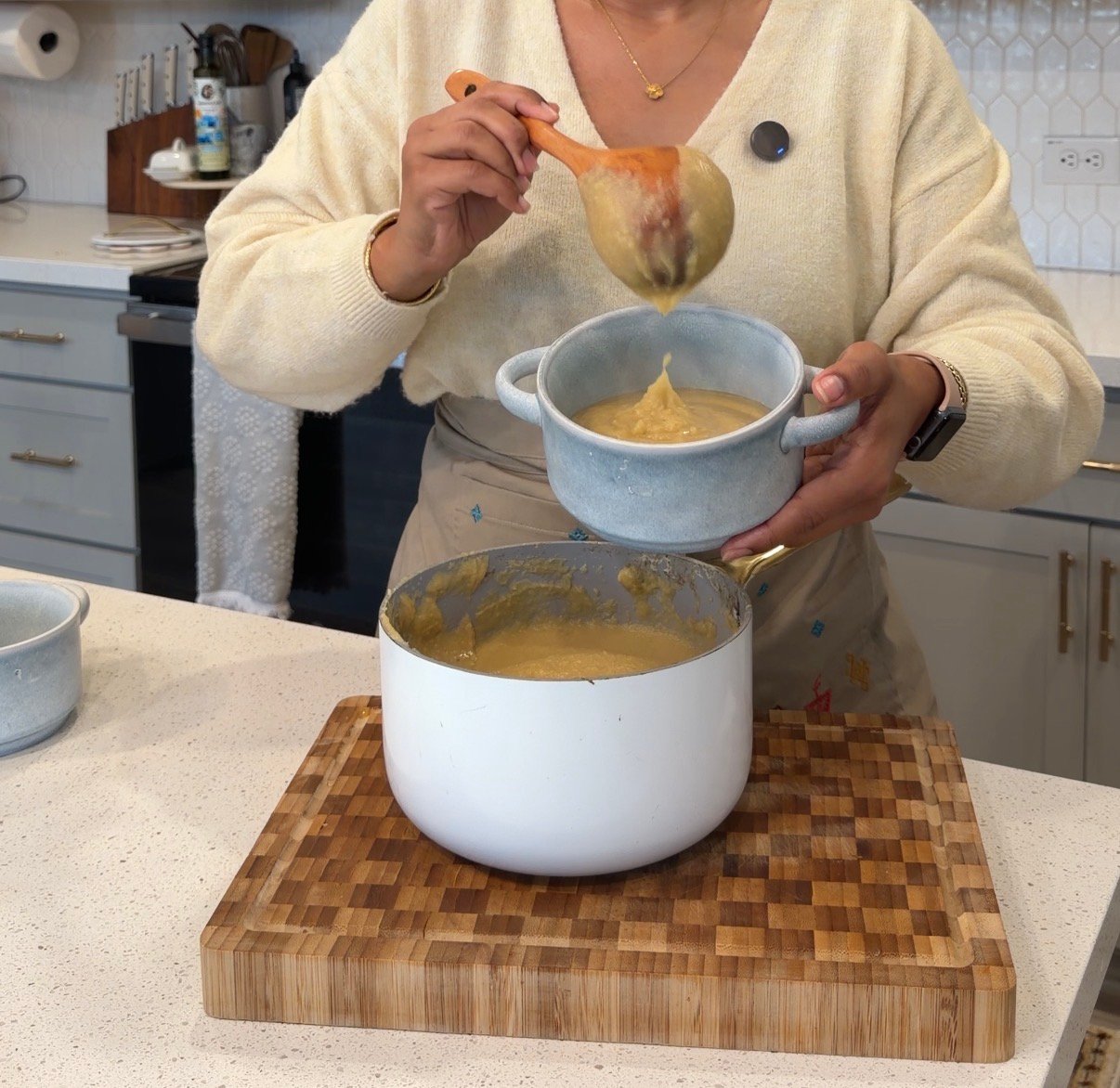
- Step 2: Once the beans are soft, blend until smooth.
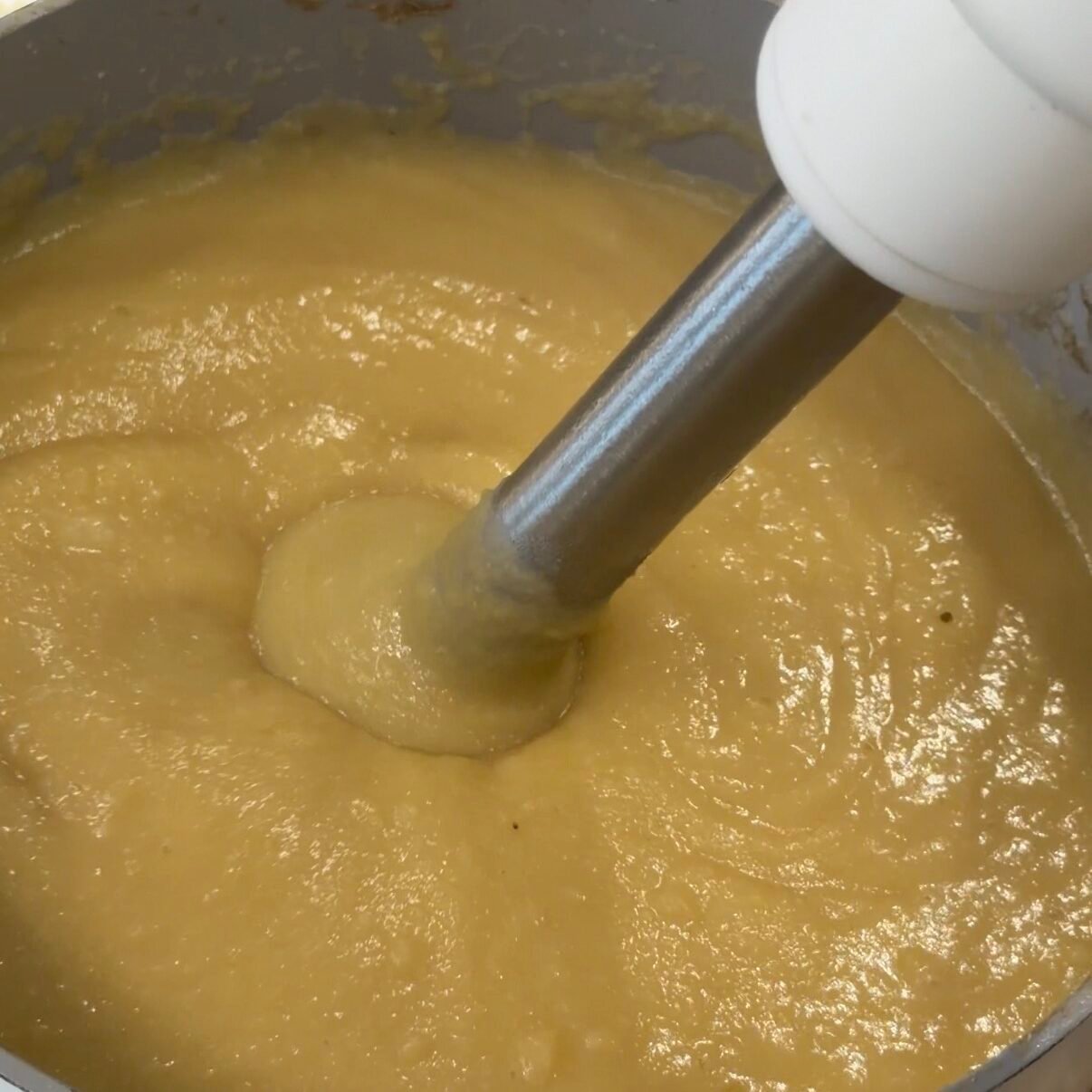
- Step 3: Once blended, add in seasoning, olive oil, and fried garlic.
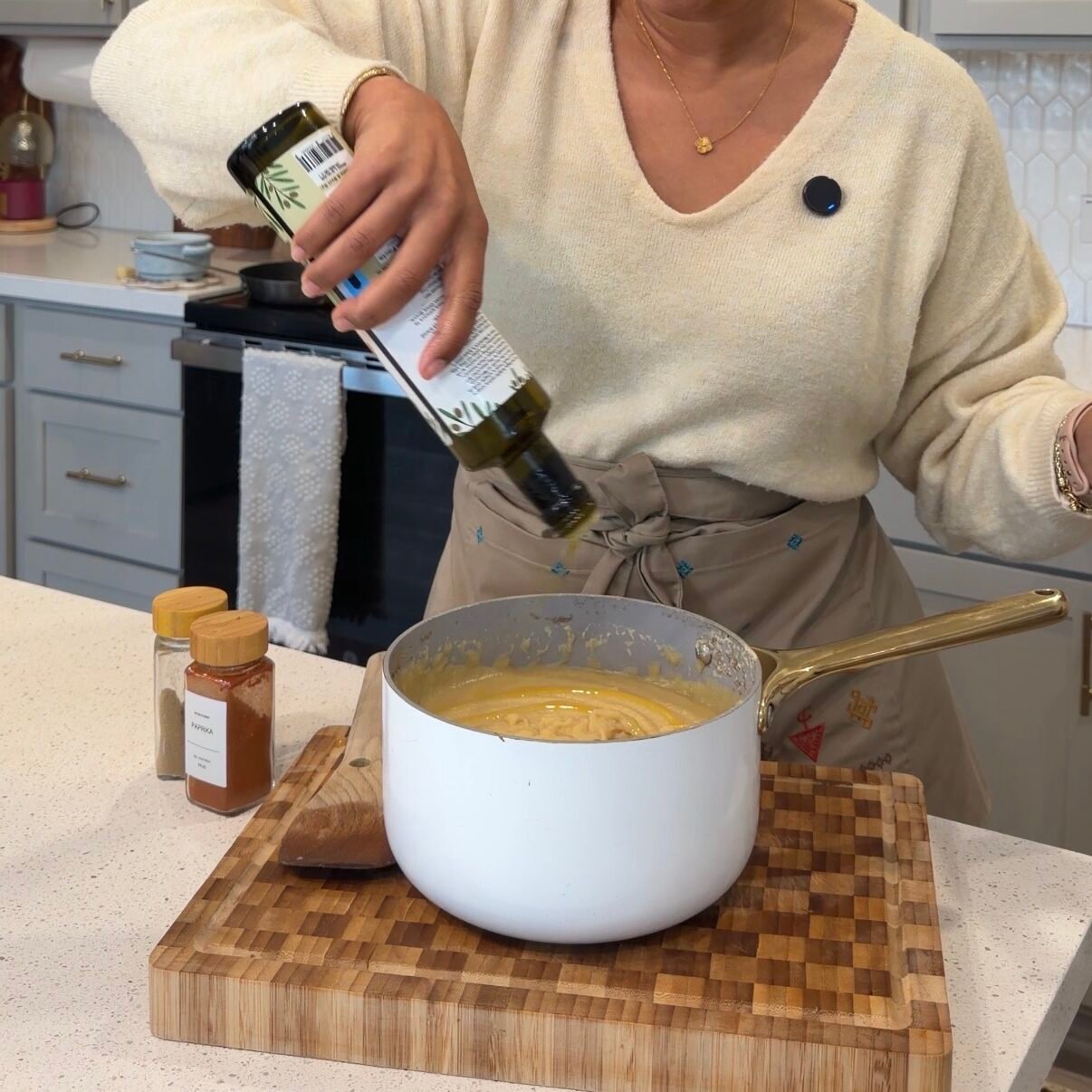
- Step 4: Top off with more olive oil, spices and serve.
Tips for Making the Best Bissara
- Don't rush the beans: The fava beans need to be very soft before blending. This is what gives Bissara its signature creamy texture.
- Adjust the consistency: Some people prefer their Bissara thick, almost like a purée, while others enjoy it a little thinner. Add water gradually until it's just right.
- Don't skimp on the olive oil: The olive oil is more than just a garnish. It adds so much flavor and richness to the finished soup.
- Fry your garlic gently: Lightly golden garlic adds a wonderful depth of flavor. Keep the heat low so it doesn't burn.
- Season at the end: Taste before serving and adjust the salt, cumin, and paprika to your liking.
Storage
Refrigerator: Allow the soup to cool before transferring it to an airtight container. Store in the refrigerator for up to 4 days.
Reheating: Bissara thickens considerably as it cools, so don't be surprised if it looks more like a purée the next day! Reheat it in a saucepan over low heat, adding a splash of water and stirring until it reaches your preferred consistency.
Freezing: Bissara freezes beautifully. Store in freezer-safe containers for up to 3 months. Thaw overnight in the refrigerator and reheat gently on the stovetop.
FAQ
Do I need to soak fava beans before making Bissara?
Soaking overnight is recommended because it helps reduce cooking time. However, you can cook dried fava beans without soaking them; just expect a longer cooking time.
Can I use split fava beans?
Absolutely! Split dried fava beans work wonderfully and often cook faster than whole beans. They also break down easily, making them perfect for a smooth soup.
Can I make Bissara without a blender?
Yes! If the beans are cooked until very soft, you can mash them with a potato masher. The texture may be a little more rustic, but it will still be delicious.
Why is my Bissara so thick?
That's completely normal! Bissara naturally thickens as it cools, especially because of the starch in the fava beans. Simply add warm water when reheating or adjusting the consistency.
Is Moroccan Bissara vegan?
Yes! Traditional Bissara is naturally vegan when made with fava beans, olive oil, garlic, and seasonings.
Related
Looking for other recipes like this? Try these:

Pairing
These are my favorite dishes to serve with [this recipe]:
- Bissara recipe
- Moroccan fava bean soup
- Moroccan winter soup
- Traditional Moroccan recipes
- Dried fava bean soup
- Vegan Moroccan soup
- Bessara recipe